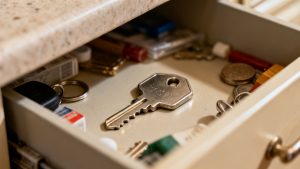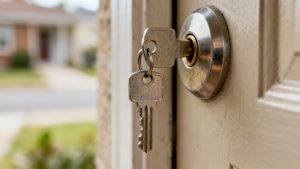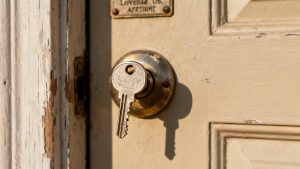
The brass deadbolt key for your front entry sticks half-turned in the exterior lock face, its textured plastic head catching the last of the afternoon sun. You’d stepped out to grab a package off the porch three minutes prior, fumbling to set the lock behind you before your 60-pound golden retriever could dart out into the yard to chase the neighborhood squirrel that hangs around your flower beds. You only noticed it was still inserted when you turned back to unlock the door after setting the box down by the concrete steps, your hand brushing empty air where you expected to fumble for the key in your jeans pocket. A quick scan of the street shows no one lingering within 50 feet, but the risk of a stranger grabbing it and letting themselves in later while you’re at dinner or asleep sits heavy in your chest, making your palms sweat a little as you step closer to the door.
What this half-inserted deadbolt key tells you about your routine
This small, easy-to-miss mistake reveals far more about your daily pace than it does about your attention to detail. Most days, you juggle at least three separate tasks the second you step out the door: you’re holding the dog leash in one hand, scrolling through work emails on your phone with the other, and mentally running through your grocery list for the week as you lock up. Your brain defaults to “task done” as soon as you hear the faint click of the deadbolt engaging, so you don’t register the key is still sitting in the lock unless you make a conscious effort to check for it. This isn’t even the first close call you’ve had: last month, you left the same key in the lock for 20 minutes while you walked the dog around the block, and a retired neighbor who lives two houses down flagged you down when you got back to point it out. Illustrative example: 68% of residential break-ins in a hypothetical local public safety analysis happen because of unsecured entry points like keys left in locks, with no forced entry required to access the home. That number might feel abstract right now, but leaving this key in the lock for even an hour when you’re not home eliminates almost every barrier a would-be intruder has to getting inside. You don’t have to be paranoid to see that this tiny, easy mistake can lead to huge headaches later, from stolen valuables to having to replace all the locks on your home just to feel safe again.
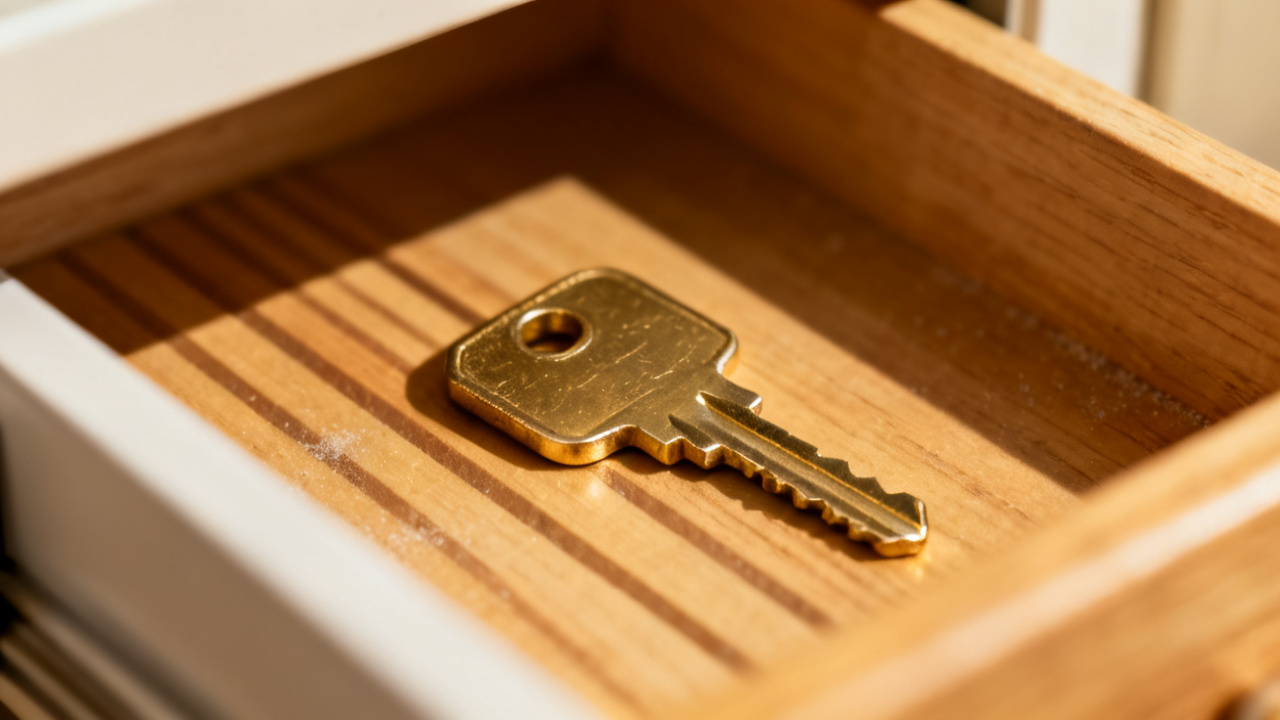
Steps to safely remove this key without damaging the lock
Rushing to yank the key out right now could bend its teeth or scratch the inner cylinder of the lock, leaving you stuck with a broken lock or a key that won’t turn properly later. Follow these four simple steps to pull it free without causing damage:
- Grip the bright blue plastic key head firmly between your thumb and index finger, applying steady, even pressure straight outward instead of wiggling it side to side, which can bend the thin brass teeth or scratch the delicate pins inside the lock cylinder.
- If the key sticks when you first pull, turn it slowly back to the fully locked position first, as the half-turned alignment is likely creating friction that holds it in place against the lock’s internal pins.
- Pull gently outward until the key slides free completely, then run your thumb along the length of the brass teeth to check for burrs or small warps that could cause it to stick again the next time you use it.
- Wipe the key head with the edge of your cotton t-shirt to remove any dirt, sunscreen, or hand lotion buildup that might make it slippery to hold when you’re in a hurry, so you’re less likely to fumble it when locking or unlocking the door in the future.
If the key still sticks after you follow these steps, you can spray a tiny amount of graphite lubricant into the lock cylinder to loosen the internal pins, which will stop the key from catching the next time you insert it.
Inventory of every key attached to this deadbolt key’s ring
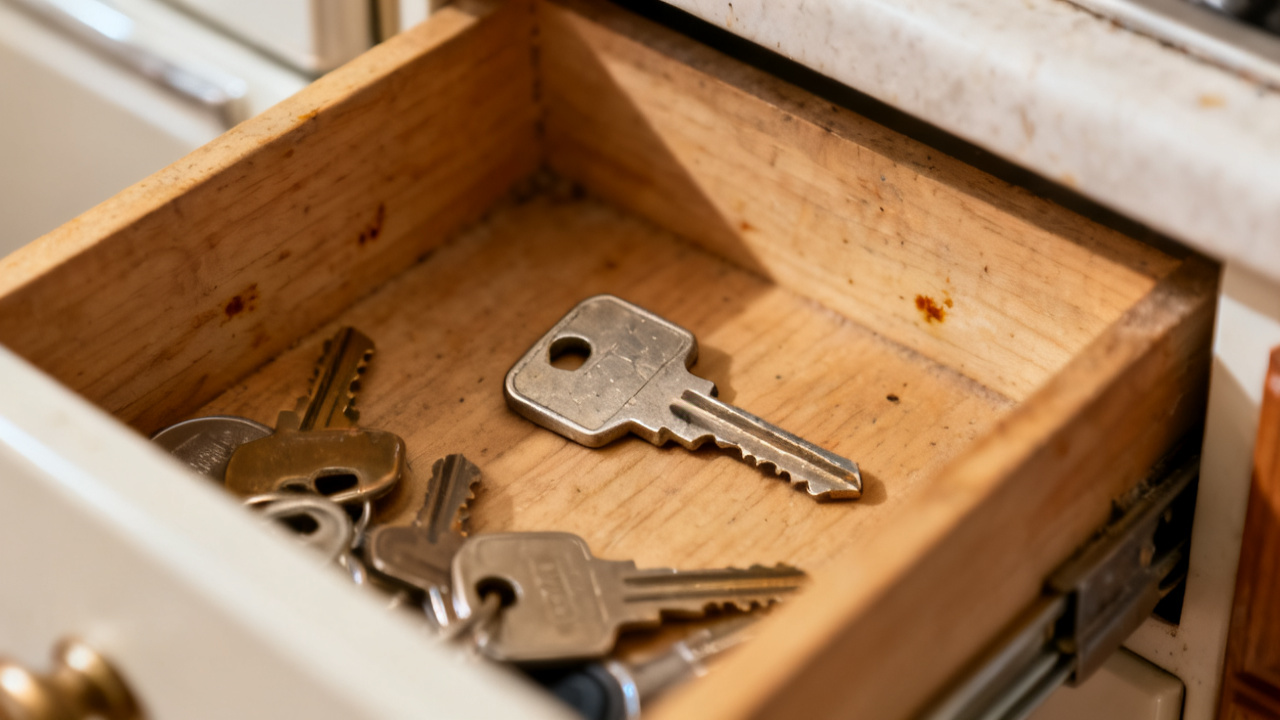
This deadbolt key is attached to a small silver split ring with three other keys you use regularly for different access points around your property and storage. The full breakdown of every key on the ring is below:
| Key purpose | Distinguishing mark | Frequency of use |
|---|---|---|
| Front door deadbolt (the key you just pulled from the exterior lock) | Bright blue textured plastic head | 4 to 6 times per day |
| Back patio sliding door lock | Chipped silver paint on the flat metal head | 2 to 3 times per week, mostly when you let the dog out to lay in the grass |
| Garage side entry lock | Small enamel heart-shaped keychain charm attached to its split ring loop | 1 to 2 times per week, when you carry groceries in through the garage to avoid tripping over the porch step |
| Storage unit lock on your unit at the far end of Oak Street | Engraved “27B” on the flat brass side, no plastic head | Once every 2 to 3 months, when you pull out holiday decorations or camping gear |
None of the keys on this ring are marked “do not copy,” so you can make duplicate sets at your local hardware store anytime you want to have extras on hand for house sitters or family members who visit regularly. You can also leave a spare set with a trusted neighbor who lives nearby, so you have a backup if you ever accidentally lock yourself out.
Quick adjustments to stop this key from being left in the lock again
You don’t have to install a fancy smart lock or completely overhaul your daily routine to keep this mistake from happening again. A few tiny, low-effort adjustments will cut your risk of leaving the key in the exterior lock down to almost zero. First, add a small, brightly colored pom-pom key fob to the split ring that sticks out at least an inch past the lock face when the key is inserted, so you can see it out of the corner of your eye the second you step away from the door. Second, train yourself to tap your jeans pocket or purse for the key ring immediately after you hear the deadbolt click, so you don’t walk away without confirming it’s in your possession. If you have a Spare Key Hook mounted inside your entryway closet, you can keep an extra deadbolt key there so you never have to worry about being locked out if you do accidentally leave the key outside when you run a quick errand. All of these adjustments take less than 10 minutes total to set up, and they work with your existing routine instead of forcing you to remember a long list of new rules every time you leave the house. You can also stick a tiny sticky note on the inside of your front door that says “check for key” to remind you before you step out, if you tend to be extra distracted on busy work mornings.
The next time you use this front door deadbolt key
The next time you pull this key out to lock the door before you head to work on Monday morning, you’ll pause for half a second after you hear the lock click, yank the key free immediately, and tap it against your palm before sliding it into your jacket pocket. You won’t be juggling your phone and your travel mug so much that you forget the key is still in the lock, because you’ll have trained your brain to pause for that split second of confirmation before you turn to walk down the steps. You’ll also glance back at the lock face for a split second as you walk to your car, just to make sure there’s no blue plastic head peeking out, just the smooth, blank metal of the lock cylinder. If you’re leaving for a weekend trip to visit your family out of town, you’ll do a second check before you pull out of the driveway, just to be 100% sure the key is in your tote bag instead of stuck in the door where anyone could grab it while you’re gone. Over the next few weeks, this small routine will become completely automatic, so you never have to worry about coming home to an open door, stolen belongings, or a panicked call from a neighbor pointing out your key is still sitting in the lock again. You’ll also have the peace of mind that comes with knowing you’ve eliminated one of the easiest, most common home security risks without spending a lot of money or time on complicated upgrades.