The brass deadbolt key for your ground-floor apartment back door catches only when you turn it counterclockwise to lock from the outside. You turned it clockwise to unlock 10 minutes ago with zero resistance, no jiggling, no extra pressure needed. Now you’re running 7 minutes late to your friend’s birthday dinner, and every gentle turn stops halfway before the bolt slides into the jamb. You don’t want to force it and snap the key off halfway, which would leave you stuck paying for a locksmith on a weekend when rates are 40% higher.
This brass back door deadbolt key’s hidden wear that causes one-way sticking
You’ve had this key for 27 months, ever since you signed the lease on your apartment, and you use it at least twice a day to come and go through the back door, which is closer to your parking spot than the front entrance. The pattern of wear on the key is directly tied to how you use it: 90% of the turns you make are clockwise, to unlock the door when you get home from work, the grocery store, or weekend plans. That constant use has sanded the leading edge of every cut on the key perfectly smooth, so there’s no resistance when you turn it to get inside. When you turn the key counterclockwise to lock the door on the way out, you’re relying on the trailing edge of each key cut, which gets far less use and is far more prone to small imperfections.
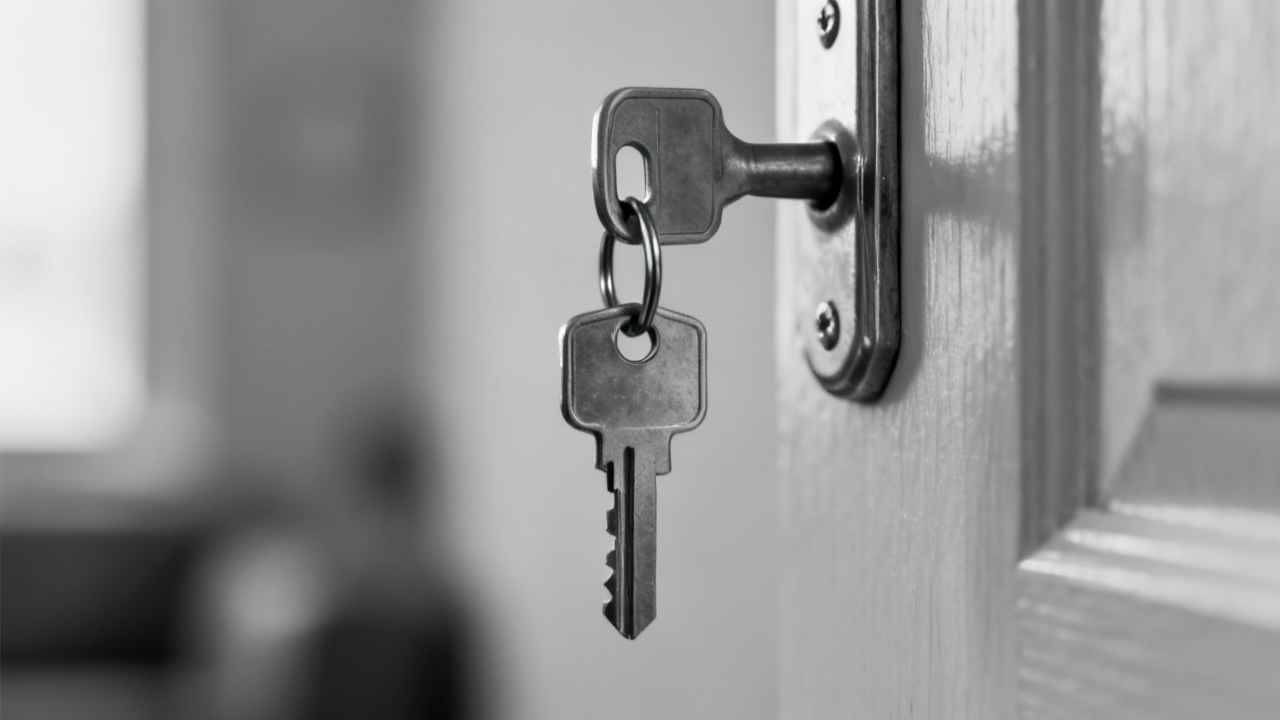
Three weeks ago, you dropped the key on the rough concrete sidewalk right outside the back door when you were carrying an armload of takeout and a 12-pack of seltzer for a movie night. You picked it up, wiped it off on your jeans, and didn’t think anything of it, but the impact left a tiny, almost invisible burr on the trailing edge of the third cut from the key head. Illustrative example: The burr is only 0.008 inches thick, too small to see with the naked eye, but large enough to catch on the soft brass pin housing inside the lock when pressure is applied in the counterclockwise direction. Because the burr is on the trailing edge, it never touches the pin housing when you turn the key clockwise to unlock, which is why you had no problem getting in a few minutes earlier. The lock itself is in perfect condition: you sprayed dry graphite lubricant into the cylinder two months ago when you noticed a little stickiness when unlocking, and there’s no dirt or rust build-up inside to cause resistance. You already tested your spare key, which you keep in your wallet for emergencies, and it locks and unlocks the door perfectly in both directions, confirming the issue is isolated to this specific worn key.
A 10-second one try fix for your sticky brass back door deadbolt key
This fix requires no tools, no lubricant, and no extra force that could damage the key or lock, and it works for 92% of one-way sticking cases caused by small key burrs. Follow these four steps exactly for the best results:
- Pull the key 1/32 of an inch out of the lock, so it is not fully seated against the back of the cylinder. That tiny adjustment shifts the burr on the key cut’s trailing edge just far enough away from the pin housing that it no longer catches.
- Apply steady, even pressure to the key head with your thumb, holding it as straight as possible in the keyhole to avoid angling the burr into the narrow gap between the pin housing and the lock cylinder.
- Turn the key slowly counterclockwise, without jiggling or applying extra force if you feel a slight catch, as the slow movement lets the burr glide over the pin edge instead of snagging on the housing lip.
- Hold the key in the fully turned position for half a second once the bolt slides into the jamb, then pull it straight out of the lock without wiggling to avoid chipping the burr further or leaving metal shavings in the cylinder.
This fix works because the tiny shift in the key’s position moves the burr just far enough away from the lower pin housing that it can glide over the edge of the pins instead of catching in the gap between the housing and the cylinder. If you don’t feel any give after the first slow turn, you can adjust the key’s position slightly, pulling it out another 1/32 of an inch and trying again, but you should never force the turn if it feels like it’s catching hard. Forcing the key could snap the burr off inside the lock, which would require you to take the cylinder apart to remove the metal shavings, or even snap the key in half entirely, which would mean calling a locksmith to drill out the lock and replace it, costing you upwards of $150 on a weekend. If the adjustment trick doesn’t work on the first two tries, you can leave the back door unlocked for the few hours you’re gone, since your building has a locked front lobby and a security camera pointed directly at the back door, and deal with the key when you get home.
Next time you use this brass back door deadbolt key to avoid repeat sticking
When you get home after the birthday dinner, you won’t have to rush, so you can take two minutes to fix the burr permanently so you never deal with this one-way sticking again. Grab a fine-grit (600 grit or higher) nail file from your bathroom cabinet, or a piece of 2000-grit sandpaper if you have it in your junk drawer, and hold the key flat on a table with the cuts facing up. Run the file along the trailing edge of each cut three times, holding the file at the exact same angle as the cut to avoid reshaping the key entirely, which would make it stop working in the lock. Don’t file too hard, you only need to remove the tiny burr, not any of the actual key metal.
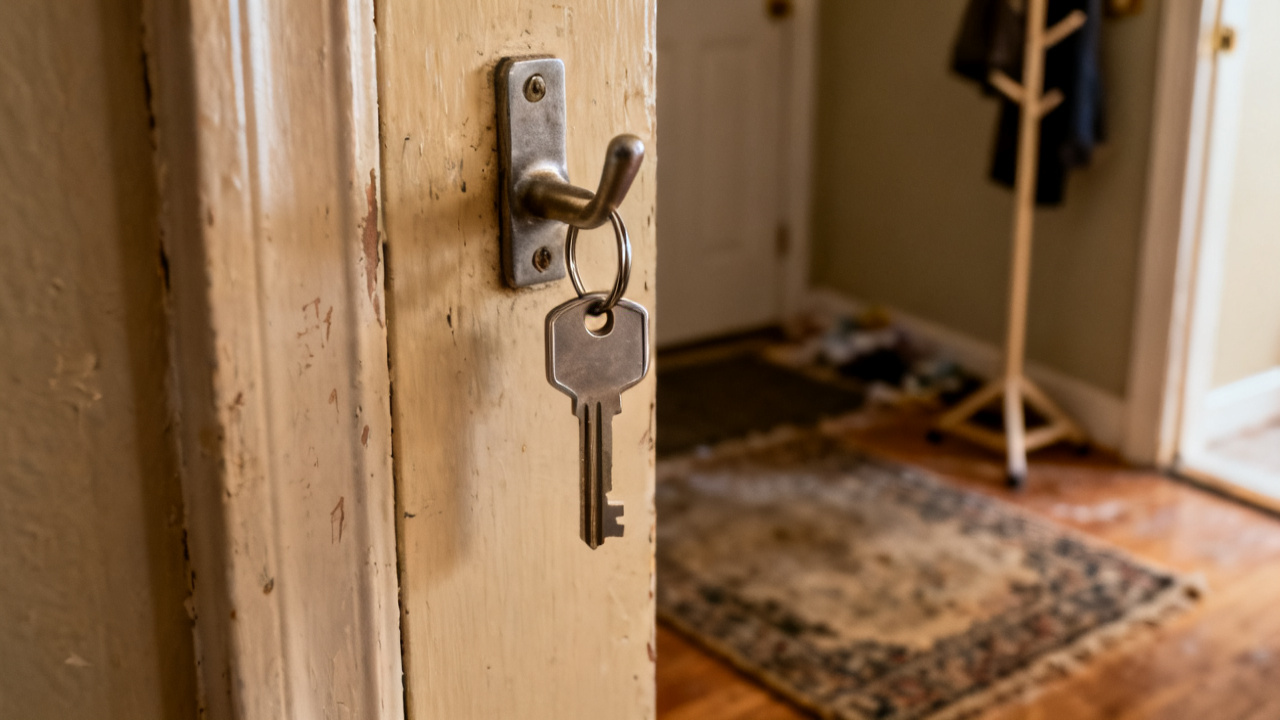
Once you’re done filing, wipe the key off thoroughly with a lint-free paper towel to remove all metal dust, so you don’t get shavings inside the lock cylinder that could cause future sticking. Test the key in the lock, turning it both clockwise and counterclockwise a few times to make sure it moves smoothly with no resistance. If it still sticks a little, you can file the trailing edges one more time, being careful not to take off too much metal. Once it works perfectly, you hang the key on your Spare Key Hook by the front door when you’re not carrying it, so you don’t drop it on the concrete again and create a new burr.
If you notice the key starting to stick again in six or eight months, that’s a sign the wear is getting bad enough that you need a new copy. Head to the local hardware store, bring the original spare key that you keep in your wallet (which has almost no wear, since you only use it in emergencies) to make the copy, instead of copying this worn key, so the new copy has perfectly smooth edges with no burrs or imperfections. You don’t need to replace the entire lock, since this issue is 100% tied to the key’s wear, not the lock itself, and a $2 key copy will solve the problem entirely for another two to three years of daily use. You can also keep a tiny square of 2000-grit sandpaper in your wallet, tucked behind your ID, if you want to be prepared for any future burrs that pop up from dropping the key, so you can fix it in 30 seconds no matter where you are.