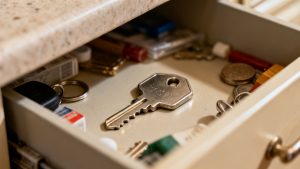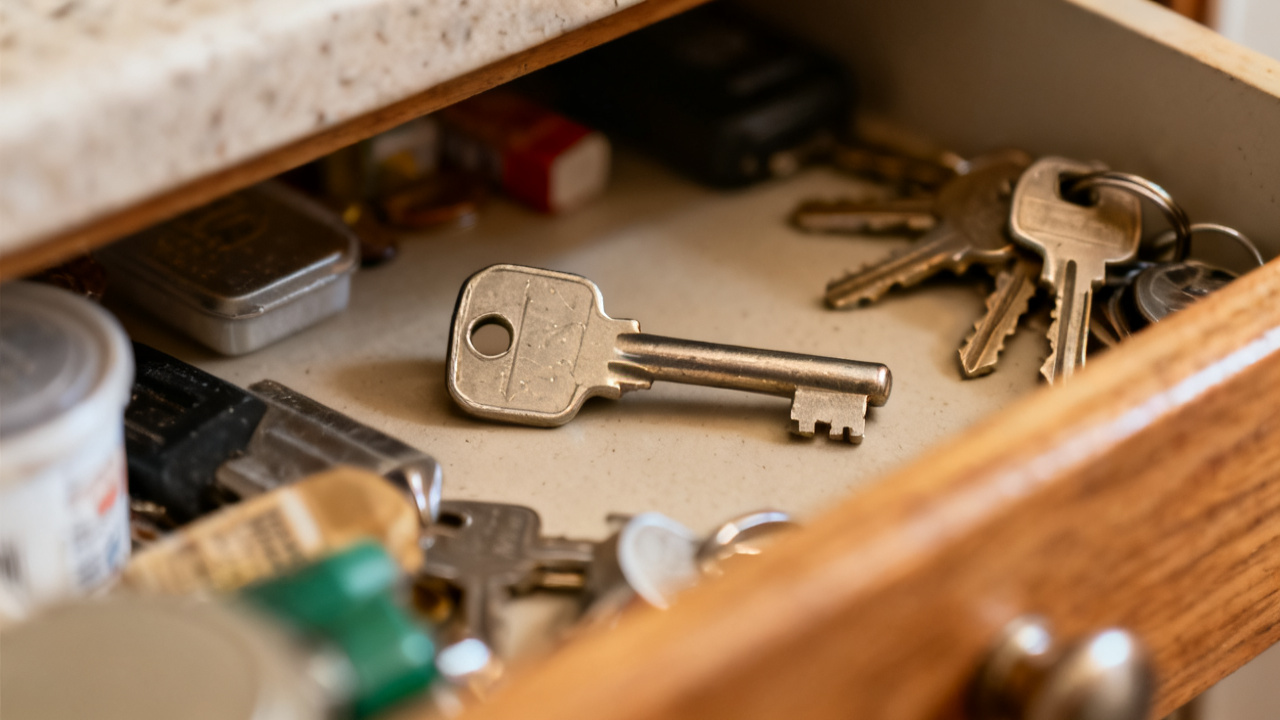
The nicked, 15-degree bent brass front door key on your keychain still slides into the deadbolt about half the time you try it. You’ve twisted it back straight twice in the last month when it got stuck mid-turn, and you keep telling yourself you’ll grab a replacement soon, but you haven’t made time to stop by the hardware store on your way home from work. You only keep it on your ring because it’s the original key you got when you moved into the apartment, and you’re weirdly attached to the little chipped edge from when you dropped it down the stairwell your first week living there. The spare key your landlord cut for you three months ago has been sitting in your junk drawer ever since, untouched, because you don’t want to break the habit of reaching for the familiar key you’ve used for two years.
Name the Bent Key and Its Spare Counterpart First
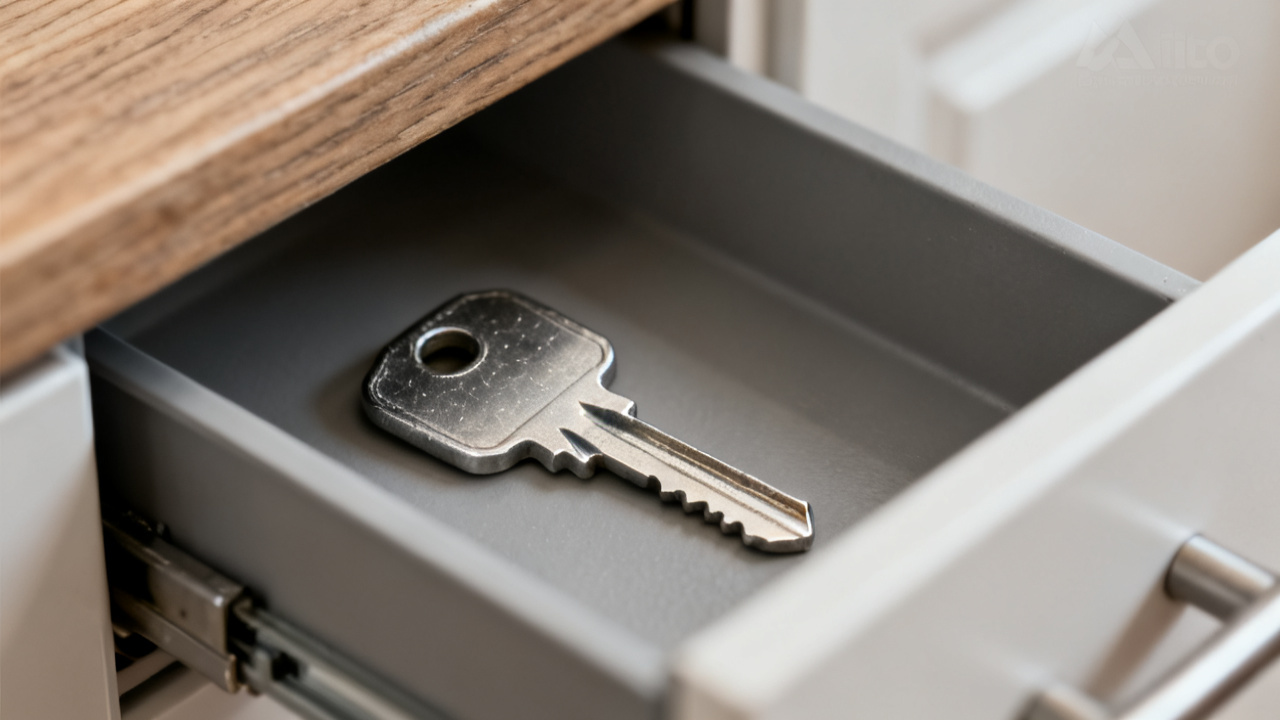
Before you make any swaps, you need to clearly distinguish the two keys so you don’t mix them up later. The bent key has a faint, half-scratched-off apartment number sticker on its rounded head, and the bend sits about a quarter of the way up the blade, right above the second cut from the tip. The spare is a brighter, unmarred brass key with no stickers, cut exactly to the same specifications, with sharp, unworn edges on every cut. Take 10 seconds to mark each one with a tiny piece of masking tape if you’re worried about mixing them up: write “BENT” on the original, and “DAILY” on the spare, so there’s no confusion when you’re sorting through your keys half-asleep in the morning. Naming them explicitly also helps you break the muscle memory of reaching for the bent key every time you approach your door, because you now have a clear label for the key you want to stop using regularly. You don’t have to scratch off the old apartment number sticker if you don’t want to, as that’s part of the key’s sentimental value, but adding a small extra label ensures you never accidentally grab the wrong one when you’re in a hurry.
Pick Which Key You Will Carry for Daily Use
The obvious choice here is the undamaged spare key, but you might be dragging your feet on the swap for a dozen small, silly reasons. You might like the way the worn edge of the bent key fits in the groove of your keychain, or you don’t want to take the time to move the little acrylic cat charm you got on vacation last year from the original key to the spare. These are tiny, trivial barriers that take less than two minutes to overcome, and the payoff of never fumbling with a stuck lock in the rain is well worth the effort. Pop the charm off the bent key, slide it onto the spare’s head, and add the spare to your main keychain in the exact same spot the bent key used to sit. This small adjustment keeps your muscle memory mostly intact, so you don’t have to fumble around looking for the new key the first few times you use it. You can keep the bent key in your pocket for the first day or two if you’re nervous about the spare not working, but you’ll quickly find that the spare slides into the lock and turns smoothly every single time, with no jiggling, no twisting, no quiet frustration when you’re already running late for a morning appointment. There’s no downside to making the spare your daily carry key, even if you feel a little guilty about retiring the original that’s been with you since you moved in.
Test the Bent Key to Confirm Its Current Failure Rate
Even if you’ve already decided to stop using the bent key daily, taking two minutes to test its performance will reinforce why the swap is so important, and help you decide if it’s worth keeping for emergency use later. Follow these four simple steps to get an accurate read on how well the key works right now:
- Stand at your front door with no other items in your hands, and set a timer for 2 minutes to keep the test quick and low-effort, so you don’t put it off for later.
- Insert the bent key into the deadbolt fully, turn it as you normally would, and mark a check on a scrap of paper if it turns smoothly and unlocks the door on the first try, or an X if it gets stuck, won’t turn, or you have to jiggle it more than twice to get it to work.
- Pull the key out, relock the deadbolt, and repeat the insert-and-turn process 10 total times to get a consistent, representative sample of its current performance.
- Count up your X marks to calculate your failure rate, which is the percentage of times the key does not work as intended on the first try, and note that this rate will only get worse over time as the already fatigued brass metal weakens with every use.
Illustrative example: If you mark 7 Xs out of 10 test tries, your bent key has a 70% failure rate, meaning it will leave you stranded outside more often than not as the bend becomes more pronounced with every twist. Even if your failure rate is only 30%, that’s still 3 out of 10 times you’ll be stuck fumbling with the lock when your hands are full of takeout, or when it’s 10 degrees outside and your fingers are going numb from the cold. It’s also critical to remember that every time you twist a bent key to force it to turn, you’re putting extra stress on the already weakened brass, making it far more likely to snap off inside the lock entirely. If that happens, you’ll have to call a locksmith to drill out the broken key piece and possibly rekey the entire deadbolt, which can cost anywhere from $120 to $200 depending on the time of day you need service. That’s a far bigger hassle than the two minutes it takes to swap your daily key out for the spare.
Next Time You Use This Bent Key, It Will Be for a Last-Resort Lockout
You don’t have to throw the bent key away to stop using it daily, especially if it still works some of the time and has sentimental value for you. Instead, you leave it in a safe, easily accessible spot inside your home where you will find it if you ever need it for an emergency, so it doesn’t end up back on your keychain by accident. Hang it on the Spare Key Hook inside your hallway closet, right next to the extra window keys and the key to your storage unit in the basement, so you know exactly where to find it if you ever lock yourself out and your daily spare is lost, stolen, or left inside the apartment. Tuck a small scrap of paper under the tape on the key’s head that says “emergency only” so you don’t grab it for regular use when you’re cleaning out the closet or looking for an extra key to give to a friend. When you do use this bent key in that future lockout scenario, you’ll take the time to insert it slowly, jiggling it gently instead of twisting hard, to avoid breaking it off in the lock when you’re already stressed about being locked out. You’ll also know that this is the only time you should ever use it: never for daily trips, never for letting the dog walker in, never for any situation where you can use your fully functional spare key instead. This arrangement lets you hold onto the sentimental value of the original key you got on move-in day, without putting yourself at risk of a broken lock or an expensive locksmith bill down the line. It’s a small, low-effort change that eliminates a tiny, constant source of frustration from your daily routine, and gives you a backup plan for if you ever get locked out later on. You don’t have to discard things that matter to you just because they no longer work for daily use, and finding a safe, dedicated spot for the bent key lets you keep that little piece of your apartment’s history without the hassle of a faulty key slowing you down every time you come home.