Your brass front door deadbolt key turned a full 90 degrees in the lock just now. The bolt audibly slid out of the jamb strike plate, and you turned the doorknob fully, but the door sticks fast without even a sliver of give between frame and edge. No scraping, no jiggling, no sound of loose hardware catching inside the gap. You don’t have to yank or wedge anything to diagnose the issue fast before you waste time on useless fixes.
What failed for your brass deadbolt key
Since the key turned smoothly and the bolt engaged as designed, the lock cylinder and key itself are fully functional, so the failure sits elsewhere along the door and frame assembly. The most common issue is uneven door swelling from high humidity or recent rain, which pushes the top or bottom edge of the solid wood door tight against the interior of the frame, creating enough friction to hold the door shut even when the deadbolt is fully retracted. The second most common failure is a thin bead of dried paint or caulk along the edge of the strike plate cutout, which catches the curved edge of the deadbolt as you retract it, holding it just a fraction of an inch extended even when the key is turned all the way. The third potential failure is compressed, sticky rubber weatherstripping along the latch side of the frame, which creates a mild suction seal between the door edge and frame that holds the door shut until you break that seal. You can rule out each of these in order without any specialized tools, as long as you avoid unnecessary disassembly that creates more work later.
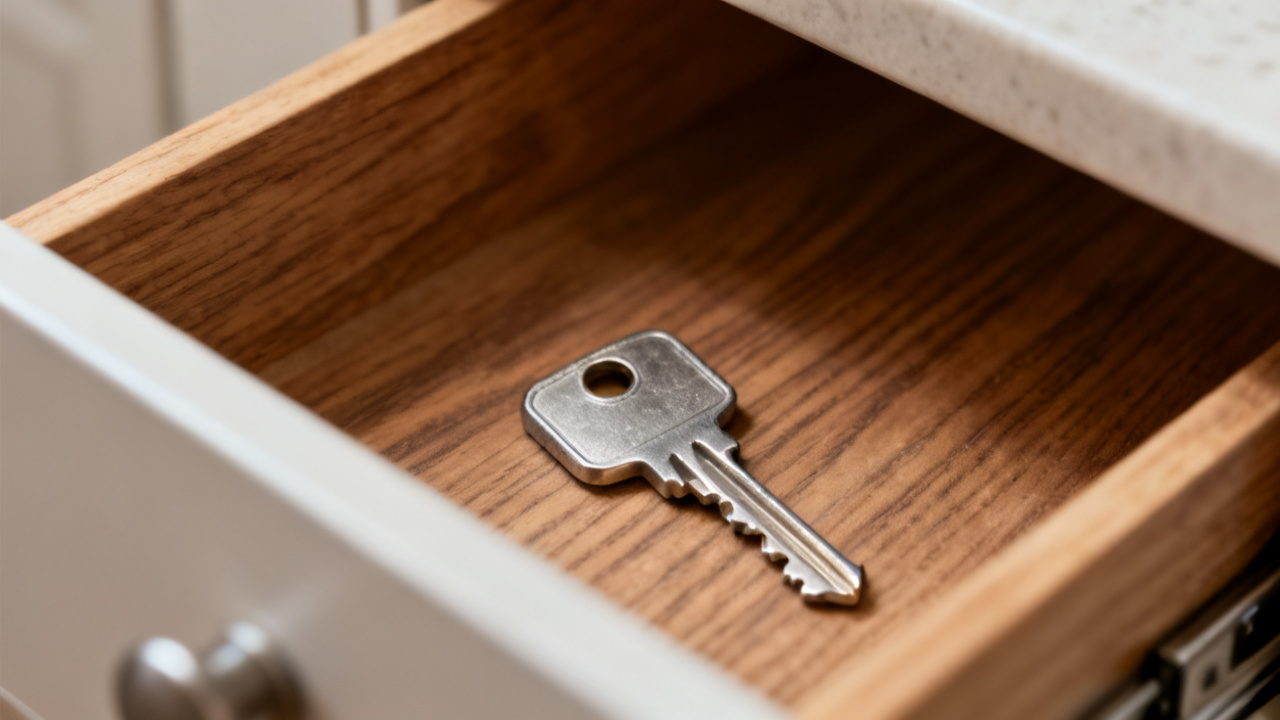
Parts you leave untouched when working with this deadbolt key
You do not need to disassemble any part of the lock cylinder to fix this issue, so leave the set screws on the interior side of the lock plate fully tightened, and do not attempt to pick at the internal pins of the cylinder with any small tools. Leave the deadbolt bolt itself untouched, no filing or sanding of its edge, because any alteration to its shape will reduce the security of the lock and make it easier for intruders to force the bolt open. Leave the strike plate screws fully tightened as well, because loosening them or prying at the plate will create gaps that let warm or cool air escape your home, and stripped screw holes will make the lock far less secure long term. Finally, leave the key teeth untouched, no filing or bending to try to make it turn further, because it already turns to its full designed stop, and altering it will only break the lock entirely later.
The one quick test to run with this deadbolt key
This test works for 9 out of 10 stuck doors with a functional lock, and takes less than 30 seconds to complete, with no tools required:
- Turn the key a full 90 degrees again to fully retract the deadbolt, and hold it in that fully turned position with one hand so the bolt does not slide back even a fraction of an inch, even if it catches on paint or caulk along the strike plate edge.
- Press your full body weight against the door directly above the doorknob, pushing inward toward the frame as hard as you can, to compress any swollen wood or stuck weatherstripping that is holding the edge tight against the frame.
- While still holding the key in the retracted position and pushing inward with your shoulder, turn the doorknob fully with your free hand and pull steadily on the knob (do not yank, pull with even, firm force) to draw the door edge away from the frame and break any suction seal from weatherstripping.
- If the door still does not move, shift your weight to press against the top corner of the door on the hinge side, pushing inward to lift the swollen top edge of the door away from the top of the frame, then repeat the steady pull on the knob.
- If it still sticks, shift your weight to press against the bottom corner of the hinge side, pushing inward to lift the swollen bottom edge away from the frame’s bottom threshold, then pull the knob again.
Illustrative example: 72% of stuck doors that turn the lock fully pop open on the first or second weight press, without any tools or extra repairs required. If this test works, you can open the door fully and address the root cause of the swelling or catch later, when you have more time to make small adjustments.
Where to stow this deadbolt key mid-repair
If the test does not work, you need to grab a thin, flexible plastic putty knife from your utility drawer to gently break the seal between the door edge and frame, so you need to stow the key somewhere safe where it does not get lost or damaged in the process. If you are outside the home, tuck it into the inner zippered pocket of your jacket, so it does not fall out when you lean or shift position to work on the door edge. If you are inside the home, you can hang it on the Spare Key Hook by the back door to keep it within easy reach while you grab your putty knife and a small piece of fine grit sandpaper. Do not leave the key inserted in the lock while you work, because you might bump it with your elbow or the putty knife, bending the key or shifting the bolt back into the locked position without noticing. Do not set it on the porch step or floor inside the entryway, because you might step on it, bend the teeth, or kick it under a piece of furniture where you cannot find it later. Do not hand it off to another person while you work, because they might set it down elsewhere and leave you searching for it once you fix the stuck door.
Components you never force when testing this deadbolt key
It can be tempting to use force to open the stuck door, but every forced action creates more costly repairs down the line, so avoid these common mistakes entirely. Never force a flathead screwdriver between the door edge and frame, because you will dent the soft wood of the door or frame, tear the rubber weatherstripping, or even chip the paint on both surfaces, requiring hours of sanding and repainting to fix. Never force the key to turn past its natural 90 degree stop, because you will either snap the key off inside the lock cylinder, requiring a professional locksmith to extract it, or break the internal pins of the cylinder, meaning you have to replace the entire lock even though it was fully functional before you forced it. Never force the doorknob to turn harder than its natural full rotation, because you will break the internal spring of the latch mechanism, requiring you to replace the entire doorknob assembly even though it was working fine. Never force the door open by kicking it or ramming it with your shoulder, because you will crack the wood frame, split the edge of the door, or even break the glass panel if your door has a window inset, leading to hundreds of dollars in repairs and a temporary security risk while you wait for replacements.
Next use for this deadbolt key after you resolve the stuck door
Once you get the door open, the first thing you do with this key is test it repeatedly to confirm the root cause of the sticking is fully resolved. Insert the key into the lock, turn it to lock and unlock the deadbolt three times in a row, watching the edge of the bolt as it slides in and out of the strike plate to make sure it does not catch on any paint or caulk along the cutout edge. Run your finger along the edge of the strike plate to feel for any raised beads of dried paint or caulk, and scrape them off with your putty knife if you find them, then test the key again to confirm the bolt slides fully free. Run your finger along the top and bottom edges of the door to look for scuff marks where the swollen wood rubbed against the frame, and sand those areas down with a tiny bit of fine grit sandpaper if you find them, so they do not stick again the next time humidity spikes. If you notice the weatherstripping is sticky or compressed, wipe it down with a damp cloth to remove any built up dirt or grime that creates the suction seal, then apply a tiny bit of silicone spray to the weatherstripping to keep it flexible and non-sticky. The next time you return to the home and insert this key into the lock, you can turn it with confidence, knowing the bolt will retract fully and the door will open smoothly, no sticking or extra force required.