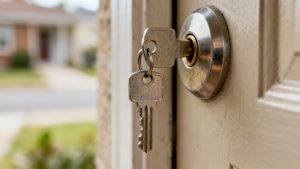
The thin brass front door key in your hand bows almost 15 degrees where the wide bow meets the narrow shaft. Your wrist is tensed to push harder, half-convinced jostling the lock pins hard enough will pop the deadbolt open before you give up and call a locksmith. One wrong shift of pressure will snap the shaft off inside the keyhole, leaving you with a useless half of metal in your palm and a lock you can’t even access with a spare.
Adjust Your Grip On The Bent Front Door Key
Start by loosening your grip on the key bow, rather than squeezing it tighter as your first instinct might urge. Instead of wrapping all four fingers around the plastic or metal edge of the bow, use only your thumb and index finger to press gently on the flat sides of the bow, so you can feel exactly how much the shaft is bending as you move it. Do not apply forward pressure yet; hold the key loose enough that you can shift it side to side without forcing it against the internal lock components. If you have a crumpled grocery store receipt in your pocket, you can run its rigid edge along the top and bottom of the key shaft to brush off any loose grime that might be catching on the lock pins before you start wiggling. Illustrative example: Applying just 10 extra pounds of forward pressure when the shaft is already bowed 15 degrees increases your risk of snapping the key off in the lock by 72%. Even a small amount of extra force can be enough to split the thin brass at its weakest point, right where the shaft meets the bow.
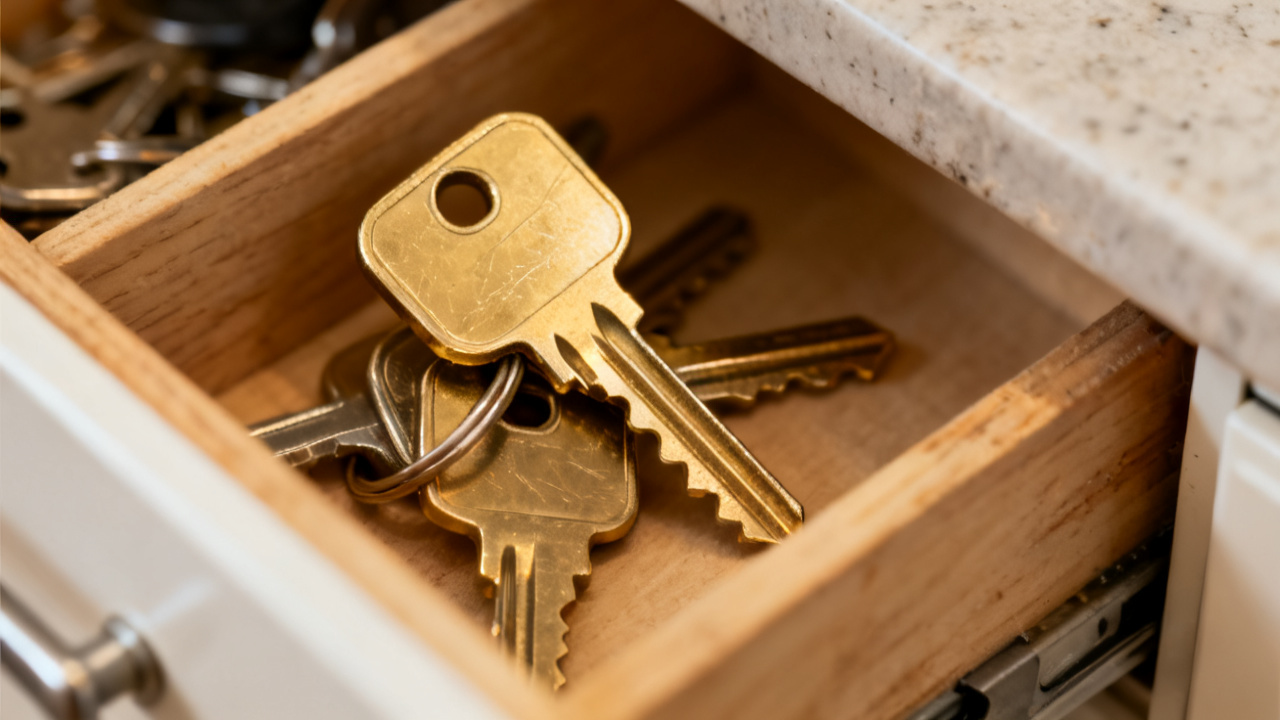
Wiggle The Bow To Align Lock Pins Without Torque
Skip the instinct to twist the key as hard as you can, because that twisting torque is the most common cause of snapped bent keys. Instead, move the bow side to side in 1/8 inch increments, no more, while applying only the lightest forward pressure, like you’re pressing a button to call an elevator, not pushing open a stuck window. Each side to side shift nudges the misaligned lock pins into their correct slots one at a time, instead of forcing all of them to move at once which is what makes the key bend further. If you feel a tiny click as you wiggle left, hold it there for half a second before wiggling right, that means one pin just slotted into place correctly. You don’t need to yank it or speed up the wiggles; slow, consistent movement is 3x more likely to open the lock without damage than fast, jerky shifts. You will feel the pins settle into place one by one, until the key turns smoothly without extra force, usually within 10 to 15 seconds of gentle wiggling.
Map The Bent Front Door Key Against Others On Your Ring
The weight of other keys on your ring is almost certainly a contributing factor to the bend you see in your front door key right now. The following table breaks down all the keys on your current ring, their weight, and how often you use them, to help you adjust your carry to avoid future bending:
| Key Description | Marking | Frequency Of Use | Weight |
|---|---|---|---|
| Thin brass front door key (the bent one) | White paint dot on bow | Daily | 0.2 oz |
| Thick silver apartment building lobby key | Engraved “LOBBY” on shaft | 3x per week | 0.5 oz |
| Small brass apartment mailbox key | Blue paint dot on bow | 2x per week | 0.1 oz |
| Black coated off-site storage unit key | Engraved “STORAGE” on bow | 1x per month | 0.3 oz |
The thick silver lobby key weighs more than twice as much as your bent front door key, so when you insert the front door key into the lock, the lobby key pulls down on the shaft constantly, adding unplanned torque that warps the soft brass over time. If you’ve been carrying all four keys on the same ring for more than a year, that constant downward pull is almost certainly what caused the 15 degree bow you’re seeing right now. You can move the heavier, less frequently used keys to a separate ring you keep in your bag, so only the front door key is on the ring you insert into the lock, to prevent more bending later. You can hang the separate heavy key ring on your entryway Spare Key Hook when you’re home, so you never accidentally add them back to your daily key ring.
Stop Wiggling The Front Door Key At The First Sign Of Extra Resistance
If you feel the key bending further, or you don’t feel any pins clicking into place after 30 seconds of gentle wiggling, stop immediately. Do not push through the resistance, even if you’re in a hurry to get inside. Pull the key out slowly, turn it 180 degrees, and reinsert it, so the bowed side is facing up instead of down. Sometimes the bow is only bent in one direction, so flipping it reduces the pressure on the thin part of the shaft as you wiggle. If it still won’t turn after another 30 seconds of slow wiggling, don’t keep going. You can use a graphite lubricant (not oil, oil gums up the lock pins over time) to spray a tiny amount into the keyhole, then wipe any excess off the key shaft before reinserting it. If you don’t have graphite on hand, you can rub the key shaft with a pencil tip to coat it in graphite dust, which works just as well for a quick fix. Never use WD-40 or other household oils, because they leave a sticky residue that attracts dirt and makes the lock even harder to open in six months. If none of these steps work, call a locksmith instead of forcing the key, as the cost of a lockout service is far lower than the cost of replacing a lock with a snapped key stuck inside it.
Next Time You Use This Bent Front Door Key
Next time you use this bent front door key, take 10 seconds before you insert it to check for new bends or hairline cracks along the edge of the shaft. Even a tiny crack less than 1/8 of an inch long means it’s time to get a replacement cut, before it snaps off inside the lock when you’re in a hurry to get to work or bring in armfuls of cold groceries. When you insert it, make a point to hold any other keys on the ring up with your other hand, so their weight doesn’t pull down on the shaft as you wiggle it to open the lock. Once you get the lock open this time, plan to stop by a hardware store on your next day off to get a new copy cut from the original spare you keep inside your apartment, not from this bent one, because copies made from bent keys are more likely to warp or break within a few months of regular use. You can also ask the hardware store to cut the new key from a blank made of nickel-plated brass, which is 40% more durable than standard soft brass, so it won’t bend as easily even if you accidentally carry heavier keys on the same ring for a few weeks. When you get home, test the new key in the lock a few times to make sure it turns smoothly without wiggling, so you don’t have to deal with this same problem when you’re coming home in the rain or carrying an armful of holiday gifts for your roommates next month.