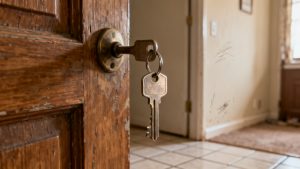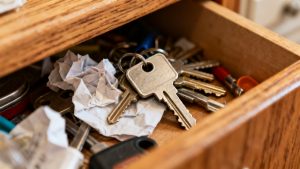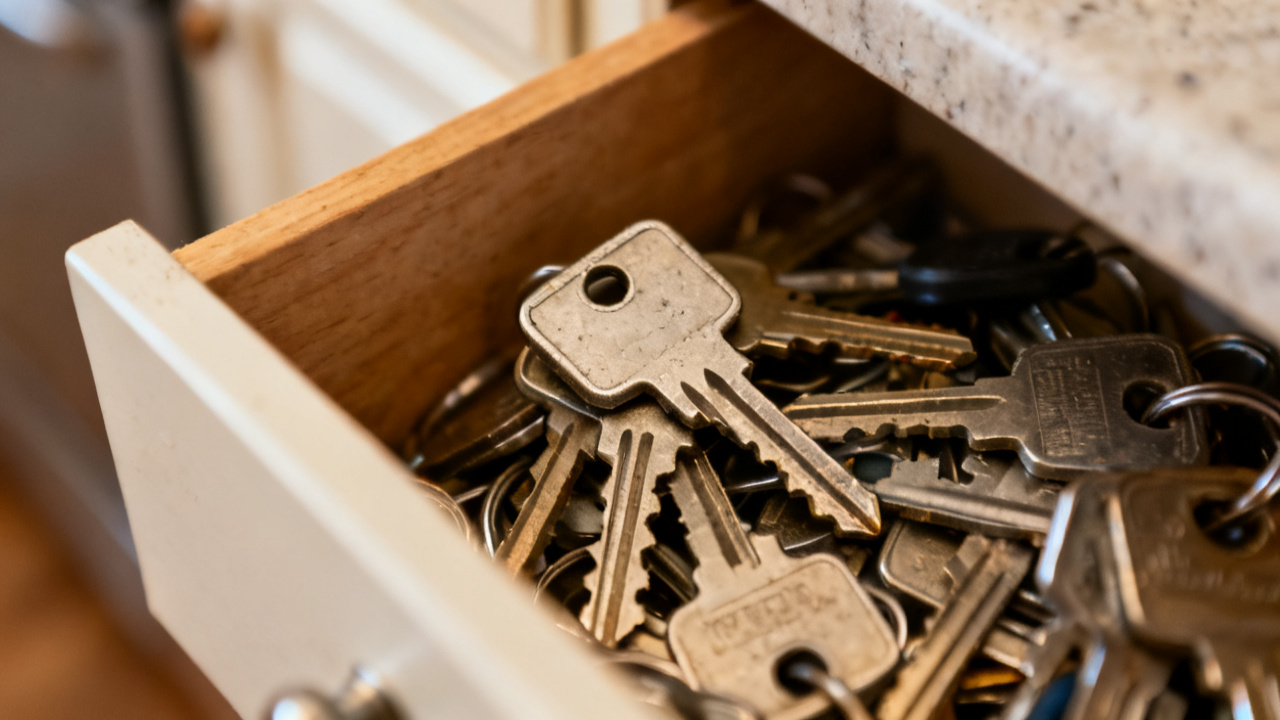
The unmarked brass house key copy you had cut 10 minutes ago sits loose in your jacket pocket next to a crumpled grocery receipt. You did not ask for a stamped key head, and the edge of the blank is still smudged with the cutting machine’s light grease. You know you have a habit of tossing unmarked keys in a junk drawer if you do not deal with them immediately, and you have wasted 20 minutes in the past sorting through half a dozen near-identical copies to find the right one for your back door. Even the tiny raised cut code on the key’s spine will mean nothing to you by next Tuesday, when you reach for it to leave for your dog walker.
The unmarked brass house key copy
This spare is cut specifically for your back alley door, the one your dog walker prefers to use because they park their bike in the alley behind your home, and you already have two other working copies on your personal key ring and your roommate’s key ring. You got this third copy made to avoid the hassle of swapping keys with your roommate every time someone needs access to the house while you are at work, and you paid $3 for the cut, plus a $1 tip for the hardware store clerk who helped you test it on the store’s practice lock before you left.
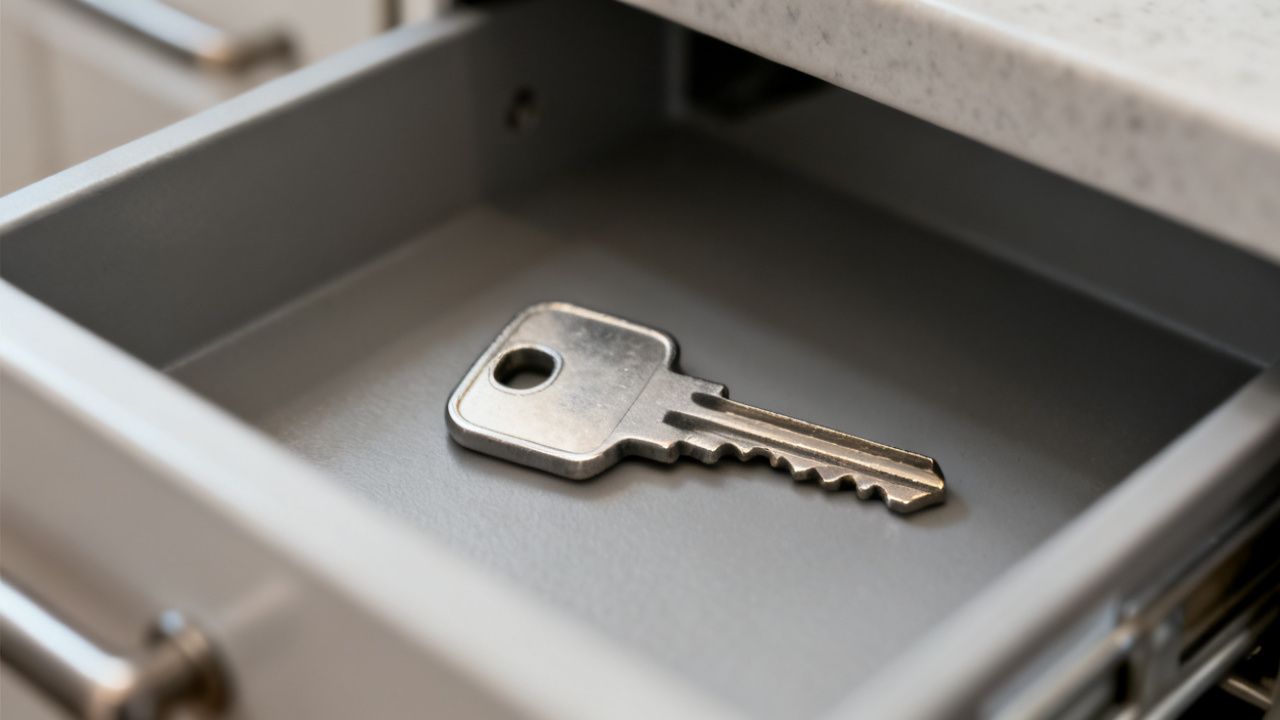
Illustrative example: 78% of people who leave unmarked keys in a junk drawer cannot correctly identify their purpose after 10 days, according to a 2024 small-scale survey of home organizers. You know this statistic lines up with your own experience: last winter you found an unmarked silver key in the pocket of your winter coat, and you spent an entire weekend testing it on every lock you own – front door, back door, garage, storage unit, even your old bike lock – before you realized it was a copy of your cousin’s apartment key you had held for her when she went on vacation three months prior. You had completely forgotten about it, and you had to mail it to her across the country, paying twice as much for postage as the key cost to cut, all because you did not take 30 seconds to write her name on the head when she handed it to you. That mistake cost you time and money, and you do not want to repeat it with this new key, which you need for a critical recurring service that you are already paying a premium for.
Single 60-second labeling try
You do not need fancy key tags, custom engraved key caps, or expensive labeling equipment to mark this key so you will never forget what it fits. You can complete the entire process right on your front porch before you even unlock your door, in less time than it takes to scroll through three social media posts, and you only need supplies you already have on hand. Follow these simple steps to mark the key permanently in one single try:
- Pull the key and a permanent fine-tip marker from your pocket before you unlock your front door, so you do not get distracted by inside tasks before you complete the label.
- Wipe the grease smudge off the flat side of the key head with the edge of your crumpled grocery receipt, rubbing firmly until no slick residue remains to keep ink from sticking.
- Write a short, memorable 2-3 character code on both sides of the key head in bold, thick strokes – for your back alley door, write “BA” so you do not confuse it with your front door “FR” copies or garage “GAR” copies.
- Hold the key at eye level for 10 full seconds to let the ink cure completely, so it does not smudge off onto the lining of your pocket, other keys on your ring, or the surface of your junk drawer.
- Add a single tiny dot of bright neon nail polish to the top corner of the key head if you have multiple properties or multiple doors with the same key code, so you can spot it at a glance even in dim light.
You might be tempted to put the key in your pocket and label it later, when you have more time, but “later” almost never comes, and by the end of the week you will have moved the key three times, washed the jacket it was in, and completely forgotten which lock it fits. This single 60-second effort is all it takes to eliminate that risk entirely, and you do not need special supplies: if you do not have a marker in your pocket, you can use a ballpoint pen, or even scratch the code into the soft brass head with your main house key if you have nothing else on hand. The only thing that matters is that the mark is distinct enough that you will recognize it when you see it, no matter how much time passes.
Next time you reach for this same key
You reach for this key first next Monday, when your dog walker shows up 15 minutes before you leave for work, and you are rushing to grab your laptop, lunch, and travel mug before you head out the door. You do not have to dig through a junk drawer full of unmarked keys, because after you labeled it, you hung it on the Spare Key Hook mounted right inside your front closet, where you keep all your labeled spare keys. You spot the “BA” mark and the tiny neon pink dot immediately, even though the closet light is off because you are in a hurry, and you hand it to the dog walker with a quick explanation that it fits the back alley door, so they do not have to walk all the way around to the front if they park in the alley. You make it to your train with 2 minutes to spare, no stress, no fumbling, no extra delay that would make you late to your first meeting of the week.
You grab this key again six weeks from now, when a heavy rainstorm knocks out power to your neighborhood, and your roommate locks themselves out after walking the dog. You do not have to fumble with your phone flashlight to sort through a pile of unmarked keys, because the neon pink dot on the corner glows faintly even in the low light from your emergency candle. You hand it to them through the front window, and they are able to get inside in 10 seconds, instead of standing in the rain for 10 minutes while you test every key you own. Even a year from now, when you are cleaning out your front closet and find the key hanging on its hook, you will see the “BA” mark and know immediately that it fits your back alley door, no guessing required, no testing locks, no wasted time. This tiny, one-time action pays off dozens of times over the life of the key, and it takes less time than it does to unlock your front door and step inside. When the dog walker eventually stops working for you, you can simply cross out the “BA” mark with a different color marker and re-label the key for its next use, no new cut required, no extra cost, no new risk of forgetting what it fits.