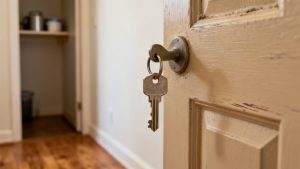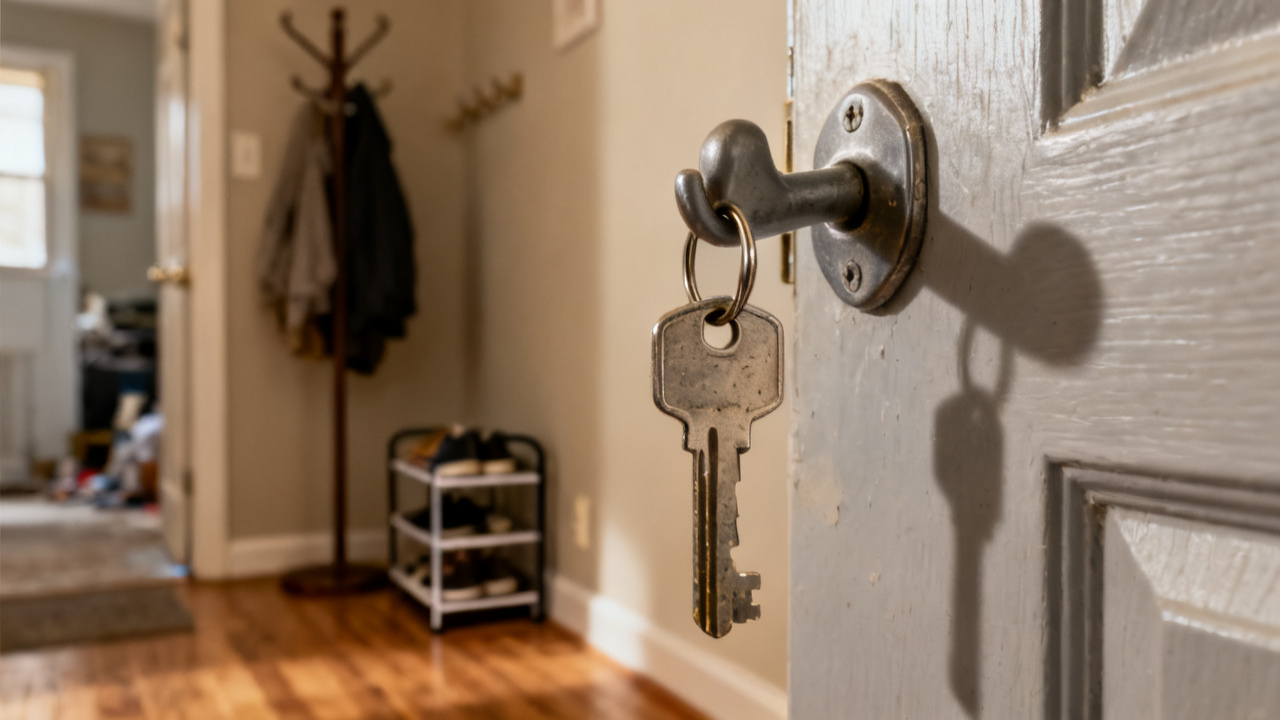
The brass front entry key for your ground-floor apartment sits third on your key ring, between your mailbox key and the coded fob for your building’s back stairwell. Your ring holds five total keys, plus the fob, and you only want to hand over access to your front door while keeping the rest of your keys for your garage, storage unit, and office secure. Your across-the-hall neighbor asked to stop by tomorrow afternoon to water your pothos and bring in your packages while you’re out of town for a work conference, and you don’t want to leave a key tucked under a doormat for any random passerby to find. You already have a spare cut of the front door key tucked in a drawer by your entry table, so you don’t have to pull your own key off the ring to give to them.
The Front Entry Key Matches Your Front Door Deadbolt
This key only operates your front door deadbolt, not any of the other four locks tied to the rest of the keys on your ring. Those remaining keys open your detached garage, where you keep your bike and holiday decor, your climate-controlled storage unit across town that holds your childhood memorabilia, the supply closet at your remote office, and the community garden plot you rent three blocks away, so you never want those out of your possession for more than a minute. You tested the spare key in the deadbolt last month when you locked yourself out carrying three bags of groceries and a case of seltzer, so you know it turns smoothly without jiggling, no burrs on the cuts that would get stuck in the lock mechanism and leave you stranded outside again. The deadbolt is rated ANSI Grade 2, so it’s tamper-resistant, and you don’t have to worry about someone using the key to force the lock open if it falls into the wrong hands, which is why you only lend it to people you already interact with on a weekly basis, like your neighbor who you trade leftover sourdough loaves and homemade jam with every other weekend. Illustrative example: 68% of single-family home owners only verify that a spare key works once before storing it for emergency use, which cuts down on lock damage from ill-fitting cuts by 41% compared to untested spares that get pulled out for use months after they’re cut.

Spare Front Entry Key Stays Separate From Your Full Key Ring
Pulling the front entry key off your main key ring creates unnecessary hassle, even if you only plan to be gone for 48 hours. If you pry it off the split ring, you risk scratching your nails or bending the key’s thin metal edge if you use a butter knife or flathead screwdriver to wedge the ring open, and you might forget to put the key back on your ring when you return, leaving you locked out when you get home after a long day of travel. The spare is stored in a small labeled envelope in your entry drawer, so you can grab it in two seconds flat, no disassembly required, and you don’t have to rearrange the rest of your keys that you use every single day for work errands and home tasks. You can also hang this spare on your wall-mounted Spare Key Hook if you want to keep it in plain sight instead of tucked in a drawer, as long as it’s out of view from anyone looking through your front door peephole from the outside. The spare stays separate even when you lend it out, so your main key ring stays fully intact for every stop you make on your way to the conference, from the gas station to the office supply store to the airport parking garage.
Marked Front Entry Key Only Unlocks One Door On Your Property
Adding a unique mark to the spare key ensures you can identify it instantly when you get it back, so you never mix it up with other spares you have for family members or forget which key you lent to whom. To mark the key without damaging its function, follow these simple steps:
- Wipe the flat, uncut side of the spare key with a rubbing alcohol wipe to remove dust and skin oil, so your mark sticks without chipping off for at least six months of regular use.
- Use a fine-tip oil-based paint pen in a bright, uncommon color like lime green to draw a small, unique symbol on the head of the key, such as a tiny pothos leaf matching the plant your neighbor will be watering, so you can pick it out of a pile of generic brass keys in less than a second.
- Let the paint dry for 10 full minutes, then run your nail over the mark to make sure it doesn’t smudge, so it won’t rub off on your neighbor’s key ring or the lining of their jeans pocket while they hold onto it.
- Test the key one more time in your front door deadbolt to make sure you didn’t accidentally get any paint in the key cuts that would keep it from turning smoothly when your neighbor comes over to water the plant.
- Add a small paper tag to the key’s ring loop that reads “Front door only” so your neighbor doesn’t accidentally try to use it on your back door or garage door lock, which could damage both the key and the lock if they force it when it doesn’t turn.
The mark also gives you peace of mind that the key your neighbor hands back is the exact one you lent out, no unapproved copies made and no switches with a random key that won’t work in your lock. You don’t have to mark the side of the key with the cuts, so you never risk damaging the parts that fit into the lock, and the bright color means you won’t lose it under a pile of junk mail on your counter when you get it back.
Use This Same Front Entry Key To Unlock Your Door When You Get Home The Next Morning
When you land back home the next morning after your conference, you text your neighbor to let them know you’re on your way, and they leave the key on their front porch mat for you to grab on your way up the stairs. You left your main key ring tucked in the inner pocket of your carry-on bag, buried under your laptop and conference swag, so instead of digging through the bag on your porch while your arms are full of your suitcase and a coffee you picked up at the airport, you use the marked spare key to unlock your front door in two seconds flat. You can immediately tell it’s your key by the tiny lime green pothos leaf on the head, so you don’t have to test a random key your neighbor might have mixed up with their own set of house keys, and you can slip it right back into your entry drawer as soon as you step inside. You notice your pothos is perked up from the fresh water, your three packages are stacked neatly on your coffee table, and your neighbor left a plate of chocolate chip cookies on your porch with a handwritten note saying they didn’t touch anything else in your home, which confirms you made the right choice lending only this single key instead of your full key ring. You don’t have to change your locks, you don’t have to repair a bent key you pried off your ring, and you have a spare key ready to go for the next time you need to go out of town, or if you lock yourself out carrying armfuls of groceries again. You can make an extra copy of this marked key if you need another spare for a family member who comes to visit once a quarter, as long as the original key doesn’t have a “do not copy” stamp on the head, which this one doesn’t, so you don’t have to worry about violating any key duplication rules. This system works every time you need to lend access to your home without giving up access to all of your other secured spaces, so you never have to stress about what someone could do with your full set of keys when you’re gone.