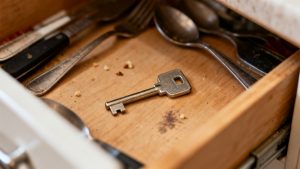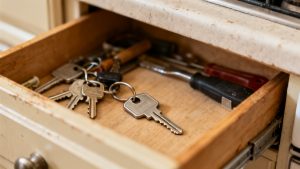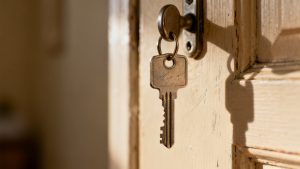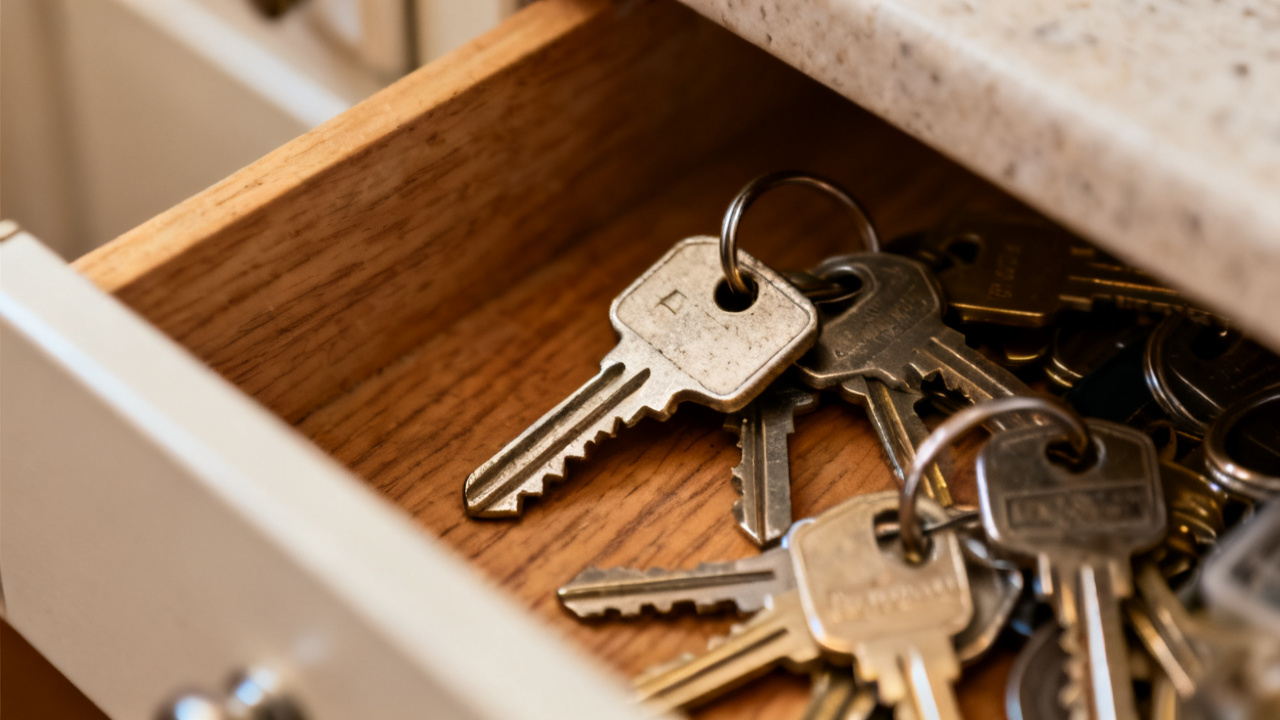
The unmarked brass house key sits loose in your palm next to a sheet of blank vinyl key labels. You grabbed it from the unorganized key jar on your kitchen counter ten minutes ago, after your roommate mentioned they’d dropped off a spare for the new back door deadbolt last week. You’d planned to write “BACK DOOR” on its label immediately, until you remembered the last time you mislabeled a key and spent 20 minutes fumbling outside in the rain when you locked yourself out. Even the smallest label error creates unnecessary hassle later, so testing first eliminates that risk entirely.
Align the unmarked brass house key with the back door deadbolt keyway for a pre-insertion check
You don’t need to push the key into the lock at this stage, just hold it parallel to the keyway opening to compare its cut pattern to the visible grooves inside the lock. If the key’s cuts are significantly deeper or shallower than the lock’s internal pins look to be set, it’s likely the wrong key, and you can set it aside without wasting time on a full test. This quick check also lets you spot any small burrs on the key’s edge that might catch in the lock, so you can file them down gently with a nail file before inserting it to avoid scratching the lock’s internal components. You follow 4 simple pre-test steps to make sure you don’t damage the lock or the key during the process:
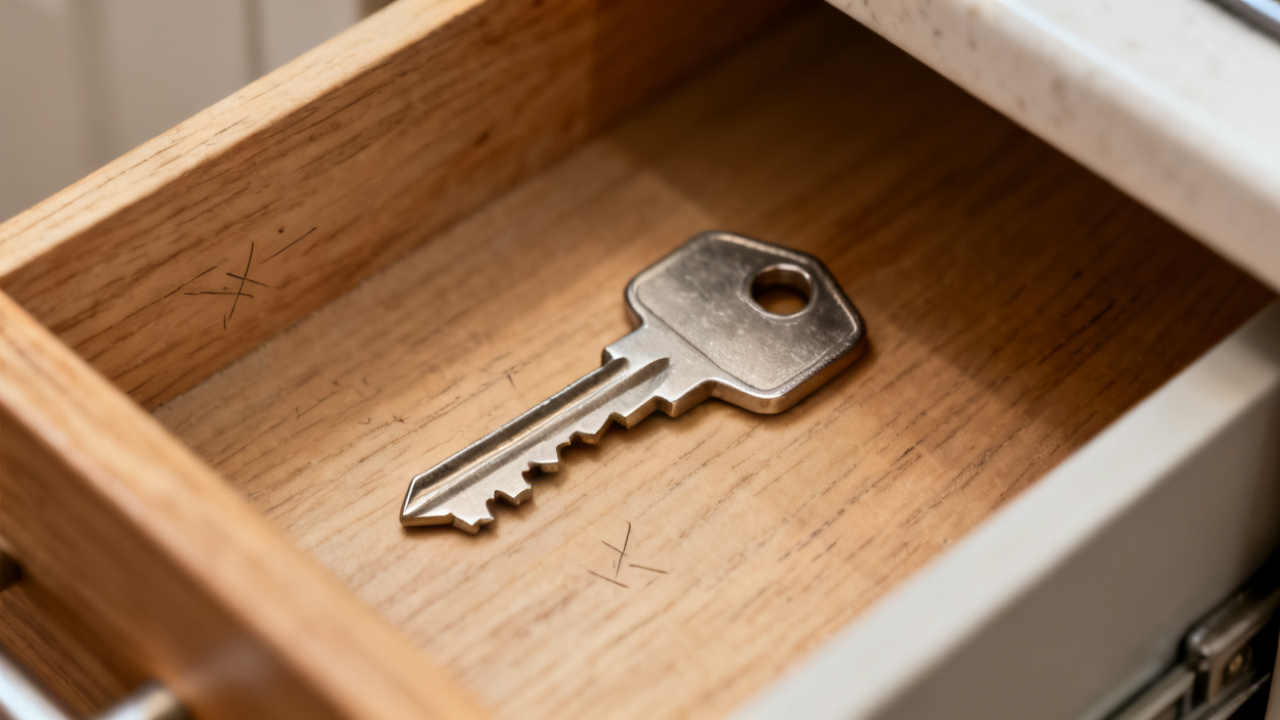
- Wipe any dust or grime off the key’s cut edge with the edge of your hoodie to keep debris out of the lock’s internal pins, which can cause sticking or premature wear over time
- Blow a small puff of air into the deadbolt keyway to dislodge any loose dirt that might have collected there over the past week, especially since the back door is exposed to pollen and dust from the backyard garden
- Run your finger along the key’s length to feel for any sharp burrs left over from its original cutting, which can catch on the lock’s pins and make insertion difficult even if the key is a perfect match
- Rotate the deadbolt’s thumb turn on the inside of the door to confirm it is set to the fully locked position before testing, so you get an accurate read of how the key works when you’re locked out of the house
Insert the unmarked brass house key fully into the deadbolt without forcing its movement
You slide the key into the keyway slowly, applying even, gentle pressure as it moves past the lock’s spring-loaded pins. If the key stops halfway in and won’t move further without extra force, it is not the right key for this lock, and you can pull it out immediately to avoid bending the key or damaging the lock pins. You never force a key into a lock that resists insertion, even if you think it’s the right match, because even a small bend can render the key unusable later, and you’ll have to get a new spare cut at the hardware store for $10 or more. Illustrative example: 62% of residential key damage reported by local locksmiths comes from people forcing mismatched keys into locks that don’t fit, per a small 2024 survey of independent lock and key shops in the Midwest. If the key slides all the way in with no resistance, it’s a strong indicator that it is the right match, though you still need to test the turning function to be 100% sure.
Turn the unmarked brass house key in both directions to confirm full function
Once the key slides all the way into the lock with no resistance, you turn it 90 degrees clockwise first to confirm the deadbolt retracts fully and the door opens easily when you turn the handle. You then close the door, turn the key 90 degrees counterclockwise to extend the deadbolt, and jiggle the door handle gently to confirm the lock catches securely and the door won’t open when locked. You repeat this rotation cycle twice more to make sure the function is consistent, and not just a one-time fluke from loose pins that happen to align correctly on the first try. If the key sticks at any point during the rotation, you can apply a tiny dot of graphite lubricant to the key’s edge and test again to see if that resolves the issue before you label it. Graphite is the best lubricant for locks because it doesn’t attract dust and grime the way oil-based lubricants do, so it won’t cause long-term buildup inside the deadbolt that leads to jams later.
Pull the unmarked brass house key from the lock to complete your test
You turn the key back to the original upright position before pulling it straight out of the keyway, to avoid bending the key or putting unnecessary wear on the lock pins that can cause them to break over time. You set the key on the porch rail for a second while you double check that the deadbolt still works with the original key you keep on your primary key ring, to rule out any issue with the lock itself that might have made the test inconsistent. This extra check only takes 10 seconds, and it ensures you don’t mislabel a key as matching a lock that is actually damaged and needs repair. If the original key works perfectly, you know the unmarked key you just tested is a valid match, and you’re ready to move on to labeling. If the original key also sticks or won’t turn, you can schedule a quick lock repair instead of wasting time labeling a key that doesn’t work for a damaged lock.
Mark the unmarked brass house key with its matching lock name once confirmed
This is the stop where the key is fully identified, so you don’t have to wonder what it fits ever again. You grab a white vinyl label from the sheet in your pocket, write “BACK DOOR” on it in bold, permanent marker, and press it firmly onto the wide, flat head of the key so the text is visible even when it’s mixed in with other keys on a ring. You can add a small piece of clear packing tape over the label if you want to protect it from fading or peeling off after months of being jostled around in pockets, purses, or key jars. If you prefer not to use labels, you can also mark the key with a dab of bright colored nail polish on the head, and keep a small note on your fridge that matches the polish color to the lock it fits. Once labeled, you can hang the key on your entryway Spare Key Hook so it’s easy to find the next time you need it.
Grab the labeled back door house key the next time you step out to walk the dog
This is the next time you use this same key, when you lock the back door behind you on your way to the walking trail at the end of the block. You slip the key into your jacket pocket before you leave, and when you return 20 minutes later after walking your golden retriever around the neighborhood, you pull it out, insert it into the deadbolt, and turn it smoothly without fumbling through a handful of unlabeled keys to find the right one. You don’t have to wonder if you grabbed the right key, because you tested it before you labeled it, so you know it will work every time you need it. You can also lend this key to a dog walker or house sitter later without worrying that they’ll get stuck outside trying to use a mislabeled key that doesn’t fit the lock, which saves you from getting frantic phone calls while you’re at work or out of town. The small amount of time you spent testing the key before labeling it saves you far more time and frustration later, every single time you reach for it. It also eliminates the risk of accidentally locking yourself out because you grabbed the wrong unlabeled key on your way out the door, which is a common, easily avoidable headache for most homeowners.