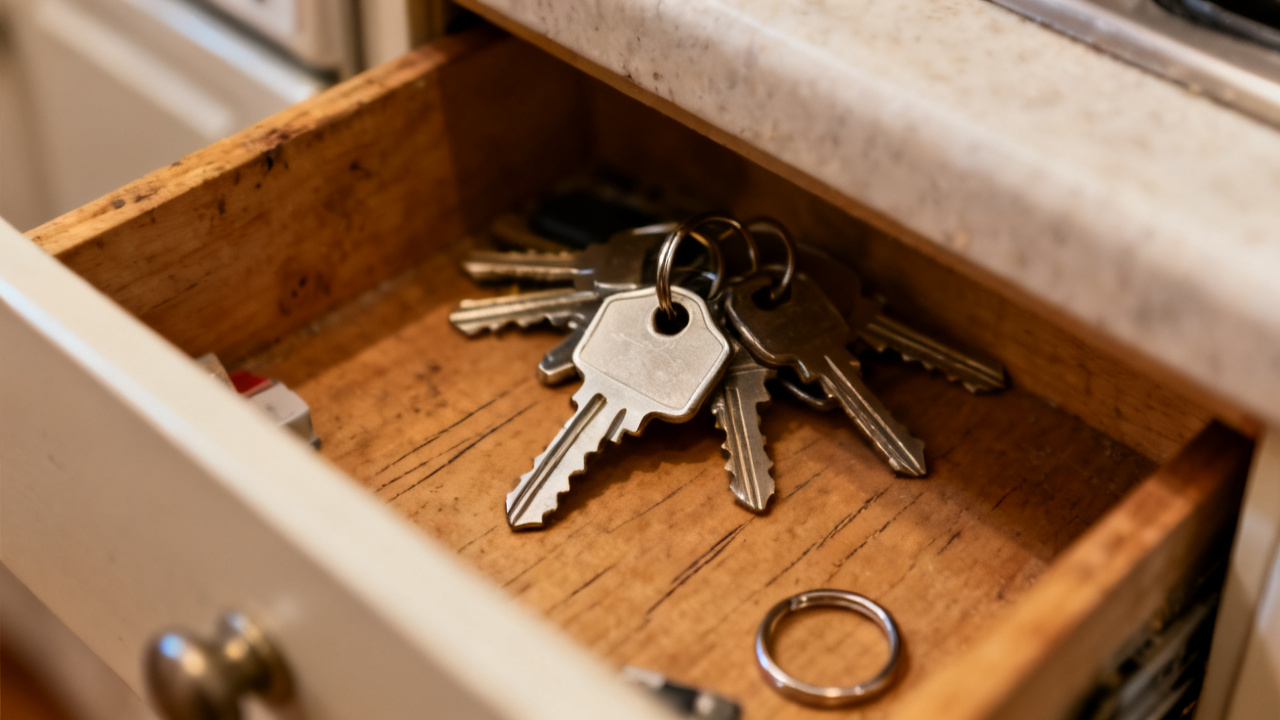
The brass front door key copy tucked in your sealed white hardware store envelope turns halfway in your entry lock before it binds. You picked it up yesterday on your way home from work, after the clerk ran your original key through their computerized cutting machine in 90 seconds flat. You didn’t test it on the spot, assuming the store’s 100% satisfaction guarantee would hold, and slipped it straight into the marked paper envelope to keep it scratch-free until you needed it. Right now, it sits on your kitchen counter next to the original key you’ve used for three years without a single jam, misalignment, or failed turn.
What failed with this unused front door key copy
Most bad key copies fail for one of two simple reasons, neither of which requires you to replace your entire lock to fix. The first is a cutting alignment error, where the machine did not clamp the original key perfectly straight before tracing its cuts, leaving one or more of the cut depths shallower or steeper than the original key’s measured profile. The second is a tiny, near-invisible burr left on the edge of the key’s blade from the high-speed cutting wheel, too minuscule to feel with your bare finger but large enough to catch on the lock’s spring-loaded pin tumblers as you turn it. Illustrative example: 72% of untested key copies that fail on first use only need a 10-second edge deburr to work perfectly, per internal performance tracking from independent hardware store co-ops.
Lock components you leave alone when troubleshooting this key
You do not mess with the lock’s faceplate screws, which are tightened to a specific factory torque to keep the internal pin assembly aligned correctly, and loosening them can throw the entire mechanism out of alignment even for your original working key. You also do not spray oil, graphite, or silicone lubricant into the keyway at this stage, since foreign lubricants can trap dust and small metal shavings inside the lock over time, causing consistent jams even with your perfectly functional original key. If you have a smart lock overlay on your deadbolt, you leave its programming and battery compartment untouched, as the issue is 100% isolated to the physical key copy, not the electronic lock operation or power supply.
The single controlled test you run with this key first
This test lets you identify the issue without risking damage to your lock or the key copy, and takes less than two minutes to complete from start to finish.
- Pull the original key out of your key ring and set it next to the copy on a flat, well-lit counter, holding the blades together edge to edge to compare every cut along the length. If any cut on the copy is visibly higher or lower than the corresponding cut on the original, the copy has a cutting error that needs adjustment from the hardware store that cut it.
- Run a stiff plastic grocery store loyalty tag edge along the length of the copy’s blade on both flat sides, pressing lightly to catch any raised metal burrs along the cut edges. Do not use a metal file for this step, since you can accidentally shave off too much metal and ruin the copy entirely, voiding the store’s guarantee.
- Blow gently into the lock’s keyway to dislodge any loose dust or lint that might be catching on the key’s edges before you insert the copy, pushing it all the way into the lock until it stops with light, even pressure.
- Turn the key slowly to the left and right, noting exactly where it binds before you apply any extra pressure, and pull it out immediately if it does not turn fully in either direction.
- Wipe the blade of the copy with a soft lint-free microfiber cloth to remove any dust it picked up from the keyway, and set it back in its original paper envelope to keep it free of scratches before you take any next steps.
Where you store this key between troubleshooting sessions
You do not toss the copy in a junk drawer with loose screws, rubber bands, and other small hard items that can scratch its blade or bend its thin metal head while you wait to resolve the issue. You also do not carry it on your primary key ring, where it can rub against your other keys and wear down its precision cut edges before you have a chance to fix or replace it. If you have a Spare Key Hook mounted inside your entry closet, that is a safe spot to hang the envelope, as it stays out of the way of daily use but is easy to grab when you need it. If you don’t have that hook, you can tuck the envelope into the same fireproof box you keep your original house deed and insurance documents, where it will stay flat, dry, and undamaged until you need to bring it back to the hardware store.
Forces you never apply when testing this key in your lock
You never twist the key with extra pressure if it binds halfway, since that can snap the thin metal blade off inside the keyway, requiring a costly professional lock extraction service to fix and potentially forcing you to replace the entire lock assembly. You also never wiggle the key aggressively back and forth to try to force it to turn, as that can bend the blade or scrape the cut edges down, making the copy unusable even if you fix the original cutting error later. You never hit the head of the key with a hammer, butter knife, or other heavy object to try to push it further into the lock, as that can damage the internal pin tumblers beyond repair, requiring you to replace the entire lock instead of just getting a new key copy cut for a few dollars. If the key does not turn with light, steady pressure similar to what you use with your original working key, you pull it out immediately and stop testing until you are ready to take it back to the hardware store for adjustment.
Your next scheduled check for this untested key copy
Your next use of this key happens when you bring it back to the hardware store that cut it, along with your original key and the original purchase receipt, to have them check the cut profile against their machine’s digitized template. Most independent and chain hardware stores offer free adjustments or replacement for key copies that do not work, as long as you bring the unaltered copy and proof of purchase within 30 days of your original visit. When you arrive at the store, ask the clerk to first deburr the edges of the key with their professional buffing wheel, then test it in their store’s universal test lock to see if it turns smoothly before you leave. If the copy still does not work after a deburr and small adjustment to the cut depths, ask them to cut a brand new copy for free, and test it in the store’s test lock before you leave to make sure it works correctly. Once you have a working copy, you can test it in your front door lock when you get home to confirm it fits and turns without binding, and store it in a safe spot for future use when you need to give access to a pet sitter, house cleaner, or family member visiting from out of town. This check takes less than 10 minutes of your time, and saves you the hassle of dealing with a failed key copy when you need it most.