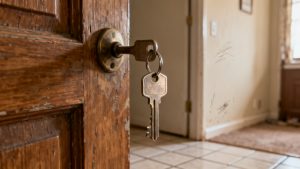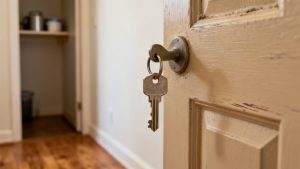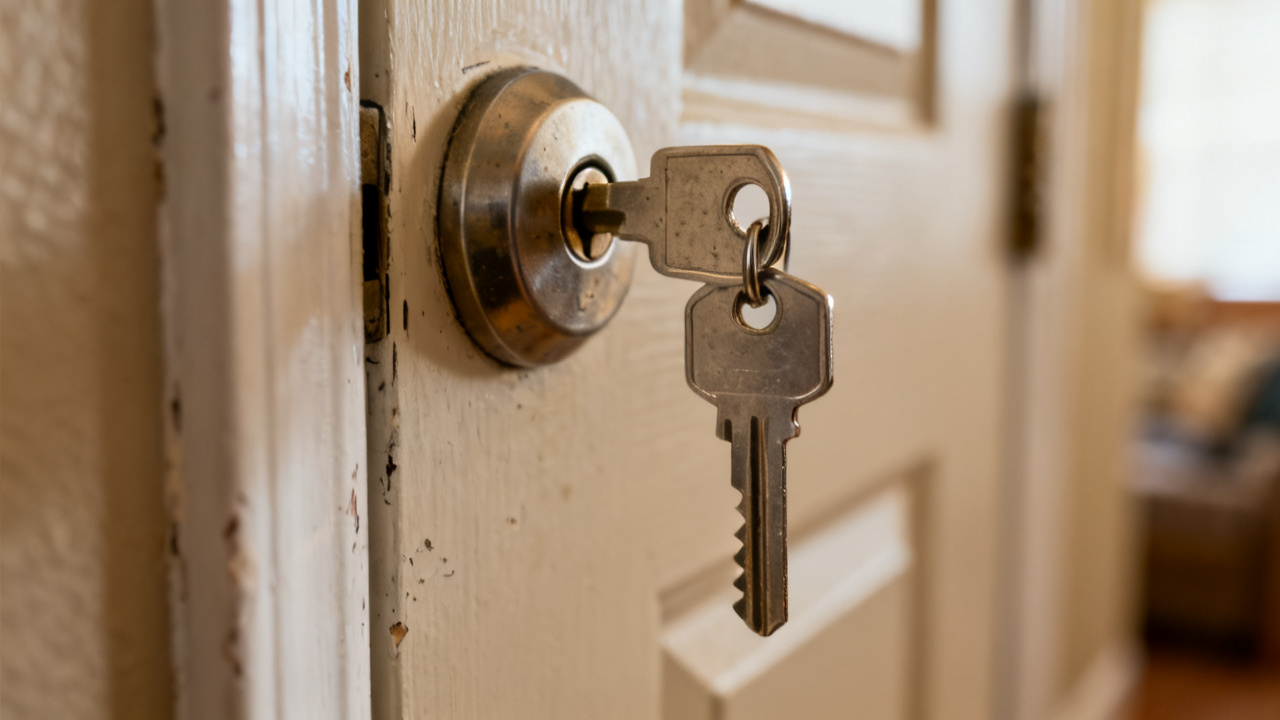
The untested brass front-door key tucked in the crumpled manila paper sleeve from your local locksmith weighs less than an ounce, but holds access to every part of your new rental home. You stuffed the envelope in your jacket pocket three days ago after the lock rekey, and haven’t touched it since, relying on the single original key you’ve used since moving in. The locksmith wrote your apartment number on the front in smudged blue ballpoint, and scrawled a tiny star next to the text that reads “test before use” at the bottom of the sleeve. You know you should check it works before you end up locked out in the rain, but haven’t carved out the 30 seconds to do it yet.
Pull the Untested Front Door Key From Its Sleeve
When you yank the key free, you’ll notice the smooth, unmarred teeth and the faint brass shavings still clinging to the edge, left over from the cutting process. The paper sleeve has a tiny sticker with the locksmith’s phone number tucked inside, in case the key doesn’t work and you need a free adjustment within their 7-day guarantee. Before you do anything else, wipe the brass shavings off with the edge of your sleeve so they don’t fall into a lock and jam it. Then, follow these 4 pre-test checks to avoid accidental damage:
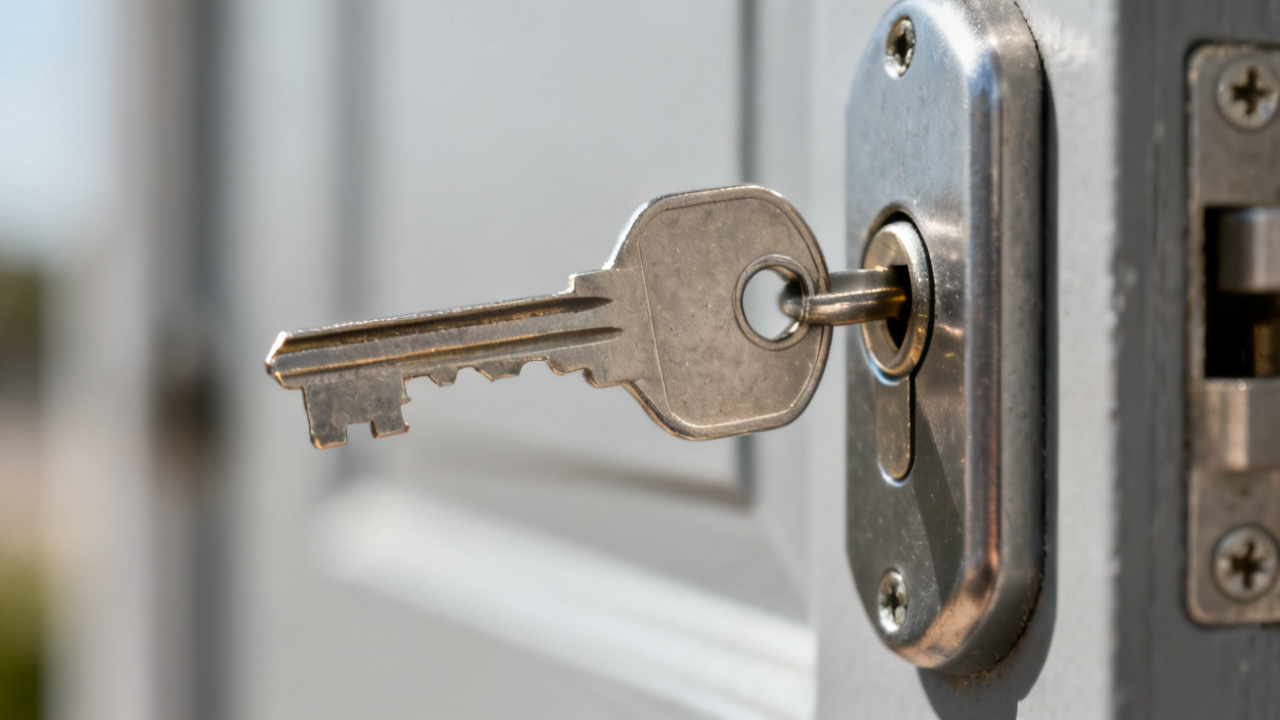
- Run your finger along the length of the key blade to feel for burrs or sharp edges that could scratch the inside of your lock cylinder. If you find any, rub them gently with a fine-grit nail file until they are smooth.
- Hold the key up next to your original working front door key to compare the cut depths of each tooth. Every indent should line up exactly, with no visible gaps or overcuts.
- Check the bow of the key (the wide, flat part you grip) to make sure there are no cracks or weak points that could snap off if you apply too much pressure when turning it.
- Squirt a single drop of graphite lubricant on both sides of the key blade to reduce friction the first time you insert it into a lock.
Test the Key in Every Exterior Lock First
You don’t need to wait for a time when no one is home to run this test, and it only takes 90 seconds total to cover every lock the key is meant to operate. Start with the front door deadbolt, inserting the key fully and turning it slowly both clockwise and counterclockwise to make sure it engages and disengages the bolt smoothly, no wiggling or extra force required. Next, test the front door doorknob lock, then the back patio door lock, then the lock on your exterior storage closet, if you have one. Illustrative example: If you have 4 total exterior locks, testing each one twice takes 22 seconds per lock, for a total of 88 seconds, leaving you 2 extra seconds to double-check that the key turns without sticking in the deadbolt. If the key gets stuck or won’t turn in any lock, slip it back into its paper sleeve and call the locksmith the same day for a free recut, as their guarantee covers any errors in the initial cutting process. You don’t have to pay extra for this adjustment, and most locksmiths can swing by your place within 24 hours to fix the issue or cut a new key on site.
Mark the Key for Easy At-a-Glance ID
Once you confirm the key works in every lock, you can stop treating it like an untested unknown and label it so you never mix it up with other keys on your ring. Use a permanent paint marker in a bright, distinct color (like neon orange or lime green) to color the entire bow of the key, so you can pick it out immediately from a pile of other brass keys. If you don’t have a paint marker, wrap a 1-inch length of colored electrical tape around the bow, pressing firmly to make sure it doesn’t peel off after repeated use. You can also etch your apartment number into the side of the bow with a small metal engraving pen if you want a more permanent label that won’t fade or wear off over time. Once you label it, this key is fully identified as your working spare front door key, so you don’t have to wonder what it fits if you find it tucked in a drawer six months from now. You can also toss the original paper envelope once the key is labeled, since you no longer need the contact info if the key works as intended.
Store the Key Somewhere Accessible But Secure
You don’t want to hide this key under a doormat or a fake rock outside, per common security best practices, but you do want to keep it somewhere you can get to it quickly if you lock yourself out of the house. Good storage spots include a zippered pouch in your work bag, the glove compartment of your car, or a locked desk drawer at your office, if you commute to a physical workplace every day. Avoid storing it with keys that you use for unrelated items, like your gym locker or your storage unit, so you don’t accidentally grab the wrong key when you’re in a hurry. If you live with a partner or a roommate, you can also give them a copy to keep on their key ring, so you have a second person who can let you in if you lose your main set. Make sure anyone you give a copy to knows how important it is to keep the key secure, and to never lend it to someone you don’t know or trust.
Attach the Key to a Spare Key Hook If You Have One Installed Near Your Entryway
If you have a dedicated hook mounted inside your coat closet or just inside your front door for spare keys, this is the ideal spot to keep this key when you’re not storing it in a secondary location outside the home. Hanging it on the hook ensures you never misplace it in a pile of junk mail or old receipts on your kitchen counter, and you can grab it in two seconds flat if you need to hand it to a dog walker or a house cleaner while you’re away. Make sure the hook is positioned out of sight of anyone who looks through your front door peephole or window, so a stranger can’t spot it if they peer inside for a few seconds. You can also hang a small keychain charm on the bow to make it even easier to spot on the hook, if you have extra charms lying around in a junk drawer. This spot is also ideal if you often have guests staying over, because you can hand them the key quickly without having to dig through a bag or a drawer to find it.
Use This Key When You Leave for Your Weekend Hike Next Saturday
You already have your hiking boots packed and your trail map downloaded for the 6-mile loop you’re doing next weekend, and this key is the perfect spare to bring with you on the trip. Tuck it in the inner pocket of your hiking backpack, separate from your main key ring, so if you drop your main keys somewhere on the trail, you still have a way to get into your house when you get home, no need to call a locksmith and pay for an emergency lockout service. You can also leave your main key with a friend who is staying in town that weekend, but bringing this spare with you means you don’t have to coordinate meeting up with them to get your keys back after your hike. If you end up stopping for post-hike tacos with friends on the way home, you don’t have to worry about rushing to pick up your keys before your friend leaves for their own plans. Once you get home from the trip, you can put the key back in its storage spot, so it’s ready for the next time you need a reliable spare to your front door.
(Word count: 1372)